Monthly Archives: April 2026
How to Become a Monk in Canada: The Formation Process at St. Peter’s Abbey
For most men in early discernment, the question isn’t only “am I called?” It’s also “how does this actually work?”
The process of entering monastic life can feel opaque from the outside — something that happens to other people in other centuries, not a concrete series of steps a man in his thirties could realistically begin next month. That opacity is one of the things that keeps genuinely called men from taking even a first step.
So here is the process plainly, stage by stage: what happens, in what order, and what each stage is actually designed to do. No stage requires certainty before you begin it. The entire process is built for men who are still figuring it out — because that’s what discernment means. If you haven’t yet read: The Difference Between Spiritual Hunger and a Monastic Vocation, now is the time to do that.
Before the Process Begins — First Contact
The process doesn’t start with an application. It starts with a conversation.
The right first move is simply reaching out to Brother Benedict van Ginkel, O.S.B., our Sub Prior, by email or phone. There’s no formal requirement at this stage — no documents, no references, nothing to prepare. Men contact us from very different places in their discernment: some have been thinking seriously about monastic life for years, others are still in the earliest stages of wondering whether the thought is worth pursuing. Both are welcome.
If you don’t yet have a spiritual director, this is a good time to find one — through your parish priest or diocese. A spiritual director can help you examine your motivations honestly as you begin exploring, and the abbey will strongly encourage having one as the process develops. But it’s not a prerequisite for picking up the phone.
Step One: The Live-In Experience
The first formal step is the Live-In — approximately two weeks of living inside the monastery enclosure alongside the monks.
It’s worth being clear about what a Live-In is and isn’t. It isn’t an audition. There’s no formal evaluation, no performance expected, no sense that you’re being assessed against a standard. It’s an experience — an opportunity to live the actual daily rhythm of St. Peter’s Abbey rather than imagining it from a distance.
During the Live-In, you participate in the full horarium: Lauds at 6:20 AM, Mass at 7:00, the work periods, the coffee breaks, Vespers at 5:35 PM, supper, recreation, Vigils at 7:30. You share meals with the monks, work alongside them, pray the Divine Office with them. If you want to know what those two weeks look like hour by hour, the full daily schedule is laid out in Lauds to Vigils – A Day in the Life at St. Peter’s Abbey.
Most men find that two weeks of direct experience provides more genuine clarity about whether this life is theirs than any amount of reading or reflection could. That clarity runs in both directions — some men leave more certain they’re called, others leave more certain they’re not. Both outcomes are valuable, and neither is a failure.
No commitment is made or implied by completing a Live-In. It is, in the spirit of John 1:39, simply a chance to “come and see.”
Step Two: Candidacy
If both the man and the community feel ready to move forward after the Live-In, the next stage is Candidacy — a six-month period of actually living the monastic life with greater depth and intention.
The candidate moves into the monastery and follows the full daily schedule. He works alongside the monks in whatever the community needs — farming, maintenance, administration, cleaning, study — and is paired with an experienced monk who serves as his mentor. Prayer and work provide the daily context for discernment. The question the candidate is living with isn’t abstract anymore; it’s being tested against concrete daily reality.
Before Candidacy formally begins, the abbey requires several documents:
- Certificates of Baptism and Confirmation
- Letters of recommendation, with at least one from a priest or spiritual director
- An RCMP criminal record check
These requirements aren’t bureaucratic obstacles. They’re the abbey’s way of ensuring that both the candidate and the community are entering the next stage with clear eyes and mutual honesty.
Step Three: The Novitiate
After Candidacy, if both the man and the community discern that the path forward is clear, he enters the Novitiate — a year of intense formation that is the deepest immersion into Benedictine life before any vows are made.
The Novice is formally received into the community and begins wearing the habit. Formation during the Novitiate focuses on prayer, study of the Rule of St. Benedict, and the deeper rhythms of monastic life. A Novice Master guides the novice throughout this year, accompanying his formation and helping him understand what he’s entering.
At the end of the Novitiate, the novice and the community together discern whether to proceed to vows. It is not a unilateral decision — the community has a voice in whether a man is ready to make his first profession.
Temporary Vows and the Path to Full Profession
Following the Novitiate, the monk makes his first temporary profession — vows taken for a defined period before the permanent commitment of solemn vows.
The Benedictine vows are three: stability, obedience, and conversatio morum. Stability is a commitment to this specific community — not to Benedictine life in the abstract, but to St. Peter’s Abbey in Muenster, Saskatchewan, as home for the rest of one’s life. Obedience is to the superior. Conversatio morum — conversion of life — is an ongoing commitment to growth in monastic virtues, a vow that has no finish line.
Temporary vows are renewable, allowing additional time for discernment before permanent commitment. Solemn profession is the lifelong vow — the permanent, irrevocable commitment that defines the monk’s identity before God and the Church.
The entire process from first contact to solemn vows typically spans several years. That pace is intentional. It gives the man and the community genuine time to know each other before either makes a permanent commitment. The deliberateness is not an obstacle — it’s a form of respect for the weight of what’s being decided.
Who This Process Is For
The abbey welcomes Catholic men between 21 and 50 years of age, with individual exceptions considered depending on circumstances. Men must be single or widowed. Beyond that, the range of backgrounds among those who have entered St. Peter’s is wider than most people expect — musicians, academics, healthcare workers, tradespeople, men who came with advanced degrees and men who didn’t.
The core qualifications aren’t credentials. They’re character: a sincere desire to seek God, a genuine capacity for community life, and an openness to formation — the willingness to be shaped by the life rather than arriving with all the answers.
Men who are uncertain whether they’re called are not disqualified by that uncertainty. The process exists precisely to help them find out.
Frequently Asked Questions
Do I need to leave my job before starting the process? No, you should keep your job. The live in period is short and does not require you to leave your job. If you become a candidate you should ask for a leave of absence or leave your job as the candidacy period is six months long.
Can I maintain contact with my family during formation? Monks maintain appropriate contact (using discretion) with their families throughout formation and after solemn profession. Monastic life involves leaving behind a previous way of life — it doesn’t mean severing family relationships. The abbey can provide guidance on how contact typically works at each stage.
What happens if I discern that monastic life isn’t right for me partway through the process? This happens, we recommend when it happens that you stop and take two weeks to discern more before you make any further decision.
Is financial support provided during Candidacy and the Novitiate? During your time at the abbey most things a person needs are provided: food, shelter, toiletries, etc. However if you would like snacks, or extra things you will have to provide these things for yourself.
Why is the entry process so long and difficult? The Rule of St. Benedict reads in Chapter 58 – The Procedure For Receiving Brothers: “1 Do not grant newcomers to the monastic life an easy entry, 2 but, as the Apostle says, Test the spirits to see if they are from God (1 John 4:1).” RB-1980
Does St. Peter’s Abbey accept men from outside Canada? No, you must be a Canadian Citizen.
What’s the difference between a monk and a friar? Monks live a stable life within a specific monastery community, bound by the vow of stability to that place. Friars — such as Franciscans or Dominicans — belong to an order rather than a specific house and typically engage in active ministry across different locations. Benedictine monks at St. Peter’s Abbey are committed to this community, in this place, for life.
The First Step Is the Smallest One
The process from first contact to solemn vows is longer than most men expect. It asks for patience, honesty, and a willingness to let clarity come gradually rather than forcing it.
But the first step — reaching out, starting a conversation — is the smallest one in the whole sequence. Everything else follows from there, one stage at a time, at a pace that gives both you and the community what you need to discern well.
If you’ve read this and found the path clearer than it was before, that’s enough to begin.
Contact Brother Benedict van Ginkel, O.S.B., Sub Prior Email: vanginkelb@stpeters.sk.ca Phone: 306-682-1781
Or visit our Vocations page to learn more about the Live-In experience and each stage of formation at St. Peter’s Abbey.
Lauds to Vigils – A Day in the Life at St. Peter’s Abbey
Most men who find themselves thinking seriously about monastic life spend a lot of time imagining what the day-to-day looks like. The imagination tends to run in one of two directions: either a kind of timeless, luminous quiet — all candlelight and chant — or something closer to austere endurance, a life stripped of everything ordinary and warm.
Neither is quite right.
What follows is the actual daily schedule at St. Peter’s Abbey — the real horarium, the real work, the real rhythm of a weekday and a Sunday. Not an idealized version. The point is to give you something concrete enough to evaluate honestly, because honest evaluation is what discernment of your Monastic vocation requires.
The Shape of the Day
The organizing principle of Benedictine life is ora et labora — prayer and work. Those two words sound simple, but they describe something specific: a day in which prayer doesn’t bracket ordinary life but runs through it. The Divine Office is prayed at fixed hours throughout the day, and everything else — meals, work, rest, community — takes its shape around those hours.
This rhythm has been the backbone of Benedictine communities for fifteen centuries. What follows is how it plays out on a specific day in Muenster, Saskatchewan.
Monday Through Saturday
6:00 AM — Rising
The day begins before most of the world is awake. Rising at the same hour each morning is itself a practice — not a hardship to be managed but a form of stability, a daily recommitment to the life you’ve chosen. There are no negotiations with the alarm.
6:20 AM — Lauds
Within twenty minutes of rising, the community gathers in the abbey church for Lauds, the ancient morning prayer of the Church. The psalms have been prayed at dawn by monks and religious for millennia. In the early morning quiet of a prairie monastery, that continuity is palpable. Lauds is brief — it doesn’t linger — but it sets the tone for everything that follows.
7:00 AM — Mass
The Eucharist follows morning prayer rather than replacing it. This sequence matters: the day begins in the Office and moves toward the Mass, rather than treating the Mass as the solitary act of piety from which the rest of the day departs. The liturgy is the structure, not the interruption.
8:00 AM — Breakfast
The first communal meal of the day. Meals at St. Peter’s are eaten together. The rhythm of gathering at table — the same faces, the same hour, day after day — is part of how community is built and maintained. It’s ordinary in the best sense of the word.
9:00 AM — Work or Study
The first work period covers a range of activities depending on the monk and the season. Farming, building and grounds maintenance, administrative work, cleaning, study, and reading all fall within this block. Different monks contribute differently, according to their gifts, their formation, and the community’s current needs. This is ora et labora made concrete: the work is real work, done in service of the community and offered to God.
10:00 AM — Coffee Break
Worth naming plainly. Monastic life is not without ordinary human moments — and this one happens twice a day. The community gathers informally. Conversation happens. On a cold Saskatchewan morning in February, this break has its own particular value.
12:00 PM — Mid-day Praise
A brief pause at midday to return to prayer before lunch. The work morning doesn’t run uninterrupted to the meal — the Office intervenes, deliberately, as a reminder of what the work is for. Mid-day Praise is short, but its placement in the day is intentional.
12:15 PM — Lunch
The midday meal, taken together, each monk takes their food in “Statio” or Station within the community. Lunch is eaten in silence while the reader reads from the book selected for the benefit of the monks.
1:00 PM — Work
The afternoon work period follows the same pattern as the morning — farming, maintenance, administration, cleaning, study, reading — shaped by what the community needs and what the individual monk is assigned to.
3:00 PM — Coffee Break
The second informal gathering of the day. Across the liturgical year and across Saskatchewan’s dramatic seasonal shifts, this time looks the same in July as it does in November. The rhythm holds.
5:35 PM — Vespers
Evening prayer — one of the two hinge hours of the Divine Office, alongside Lauds. The workday closes not by simply stopping but by returning, once more, to the psalms. Vespers marks the transition from the active hours of the day to its quieter close.
6:00 PM — Supper
The evening meal, again taken together. By this point in the day, the community has prayed together four times, worked alongside one another for hours, and shared two previous meals. The texture of supper is different from breakfast — the day is behind everyone, not ahead.
6:30 PM — Recreation
Unstructured community time. Conversation, reading, doing Jigsaw puzzles, whatever the evening permits. This hour deserves more attention than it usually gets in descriptions of monastic life. It’s where brotherhood is built outside of formal structure — not through programming but through the ordinary proximity of people who have chosen to live their lives together.
7:30 PM — Vigils
The final prayer of the day. The community gathers once more before the grand silence of night. Vigils closes the day as Lauds opened it — in the abbey church, with the psalms, together. The day that began in prayer ends in prayer.
Sunday — A Different Rhythm
Sunday has a noticeably different quality. The morning is slower, the Mass is later and more communal, and the absence of the morning work period gives the day a more spacious feel. It is, in the most straightforward sense, a day of rest within the weekly cycle.
7:00 AM — Rising (an hour later than weekdays)
7:30 AM — Lauds
8:00 AM — Breakfast
10:00 AM — Mass
The Sunday Mass is later, more solemn, and more communal in character than the weekday celebration. For a Benedictine community, Sunday Mass carries particular weight — it is the weekly renewal of the entire community’s central act.
11:45 AM — Mid-day Praise
12:00 PM — Lunch
During lunch on Sundays the monks may talk as there is no reading that day.
3:00 PM — Coffee Break
5:35 PM — Vespers
6:00 PM — Supper
6:30 PM — Recreation
7:30 PM — Vigils
What Sunday doesn’t have is a work period. That absence is meaningful. The rhythm of a distinct Sabbath within the week isn’t incidental — it’s built into the structure of life deliberately, a weekly reminder that the work serves the prayer, not the other way around.
What This Rhythm Does Over Time
A schedule like this does something to a person, given enough time.
Stability replaces ambition as the organizing principle of the day. You’re not building toward something or moving on to the next thing — you’re returning, again and again, to the same hours, the same church, the same community. That repetition isn’t monotony. It’s formation.
The repeated return to prayer throughout the day changes the experience of time. Time isn’t managed or optimized here. It’s offered. The hours of the Office mark not what you’ve accomplished but what you’ve brought to God.
And community — genuine community — is built through this kind of shared repetition. Not through retreat weekends or structured bonding experiences, but through the same faces at Lauds, the same voices at Vespers, the same table at supper, year after year. Brotherhood accumulates in the ordinary.
The schedule is demanding precisely because it asks for consistency rather than intensity. Anyone can sustain a burst of spiritual fervor. What Benedictine life asks for is the willingness to show up at 6:20 in the morning, every morning, for the rest of your life. That’s a different kind of commitment — and a different kind of gift.
Frequently Asked Questions
Is there personal time built into the day? The recreation period from 6:30 to 7:20 PM provides unstructured time each evening. Work periods also allow for individual variation — monks engaged in study or reading have a degree of personal rhythm within the broader structure. Following Vigils during the Grand Silence monks have more personal time before they retire for the night but they must respect the silence.
Do monks ever leave the abbey grounds? Yes. While the monastery is home, monks do leave for legitimate purposes — parish ministry, medical appointments, community errands, and other needs. St. Peter’s Abbey is not a cloistered community in the strict sense.
Is silence observed during meals or at other times of day? During Lent the monks eat breakfast in silence. Silence is also observed during lunch Mon – Sat as previously mentioned. Also after Vigils silence is observed.
What happens if a monk is sick or unable to keep the schedule? “Care of the sick must rank above and before all else, so that they may truly be served as Christ” – RB Chapter 36. If a monk is sick they may stay in their room or be moved to the sick quarters if need be. Someone will be assigned to care for them if needed and they can attend Office, etc. as they may tolerate.
How does the daily schedule change across the liturgical seasons? During the year the schedule changes as the Superior deems it necessary.
The Best Way to Understand This Is to Live It
Reading a schedule can tell you what monastic life looks like. It can’t tell you what it feels like to pray Lauds in the dark on a January morning in Saskatchewan, or what the coffee break conversation sounds like after a morning of outdoor work in September, or what Vespers does to the end of a long day.
That’s what the Live-In experience is for. Approximately two weeks of living this rhythm alongside the monks — not observing it, but participating in it — provides more genuine clarity about whether this life is yours than any amount of reading can.
If you’ve read this schedule and found yourself drawn rather than deterred, that’s worth paying attention to.
Contact Brother Benedict van Ginkel, O.S.B., Sub Prior Email: vanginkelb@stpeters.sk.ca Phone: 306-682-1781
Or visit our Vocations page to learn more about the Live-In experience and the steps of formation at St. Peter’s Abbey.
Easter 2026
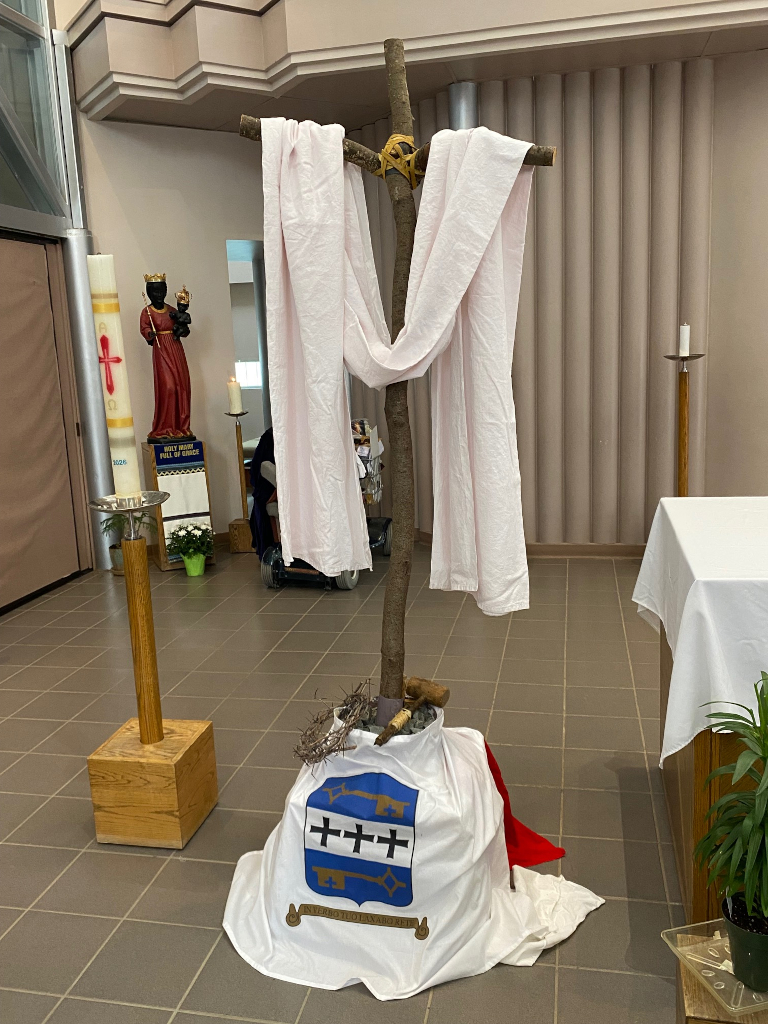
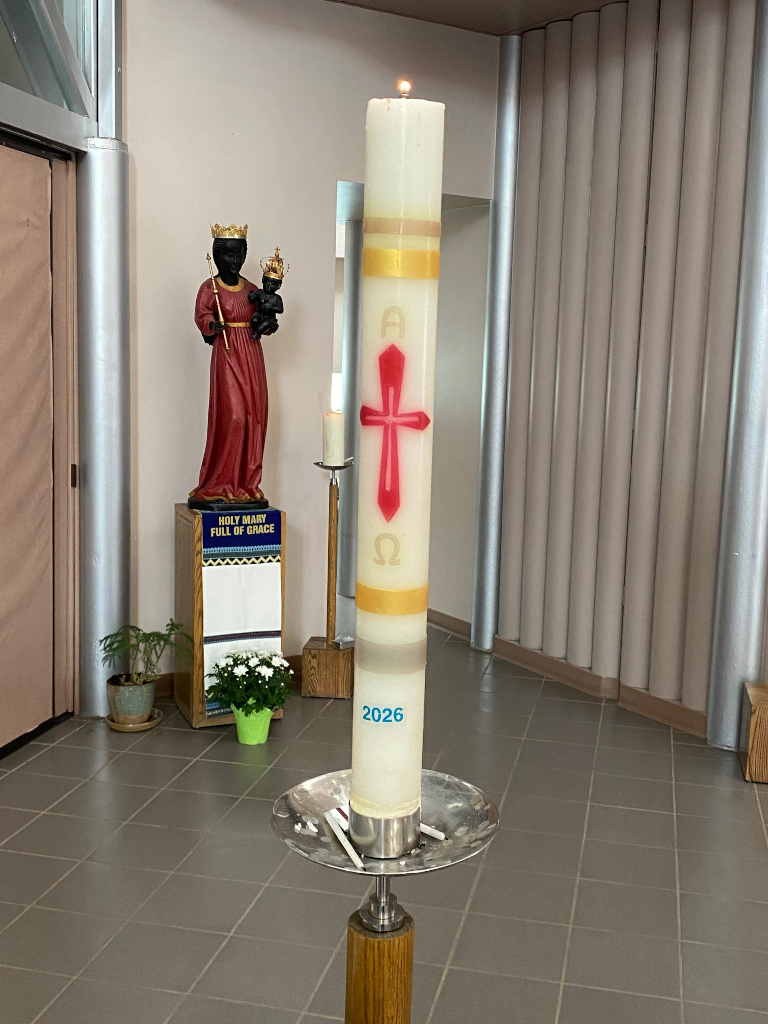
Images from the Abbey Church