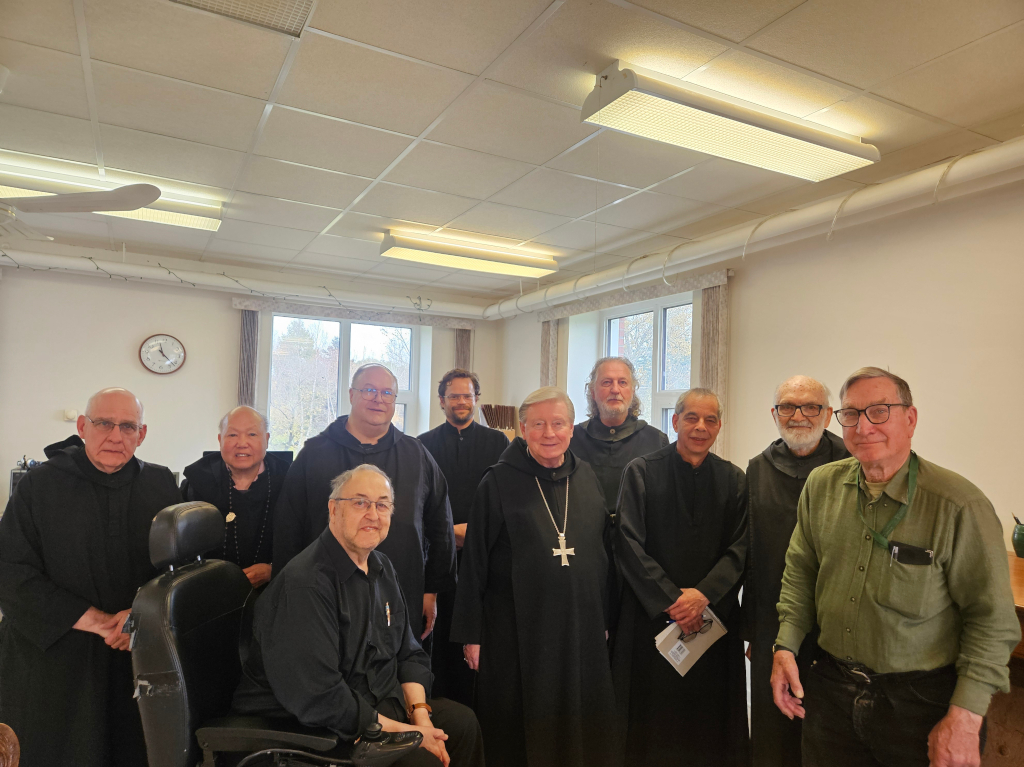
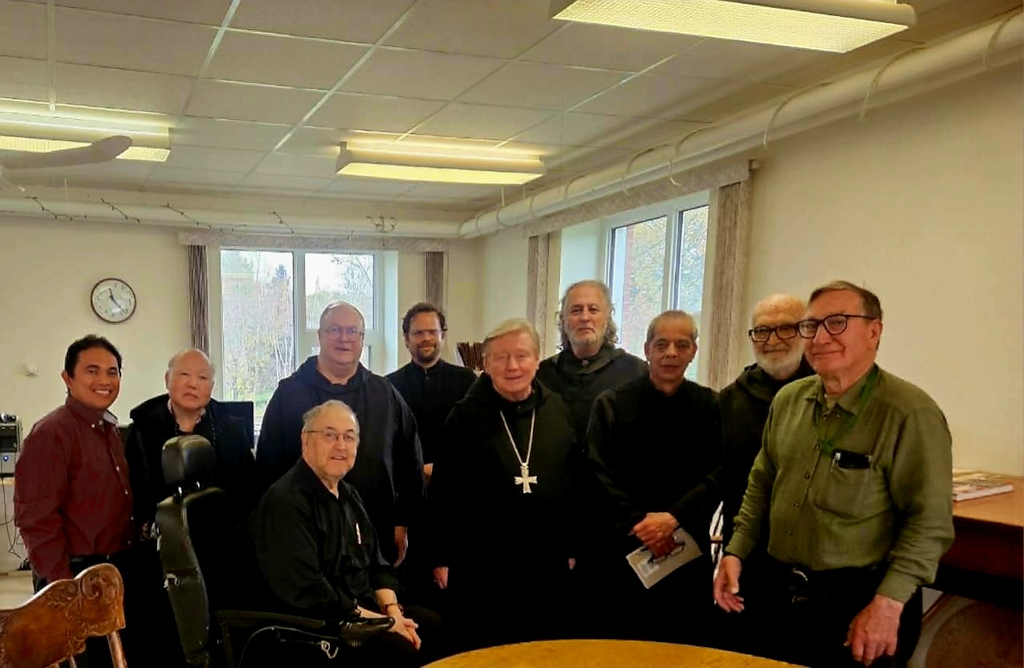
Abbot President Jonathan Licari OSB visited and had a meeting with the monks and aspirants of the abbey. He is currently the President of the American Cassinese Congregation to which St Peter’s Abbey belongs.
.
.
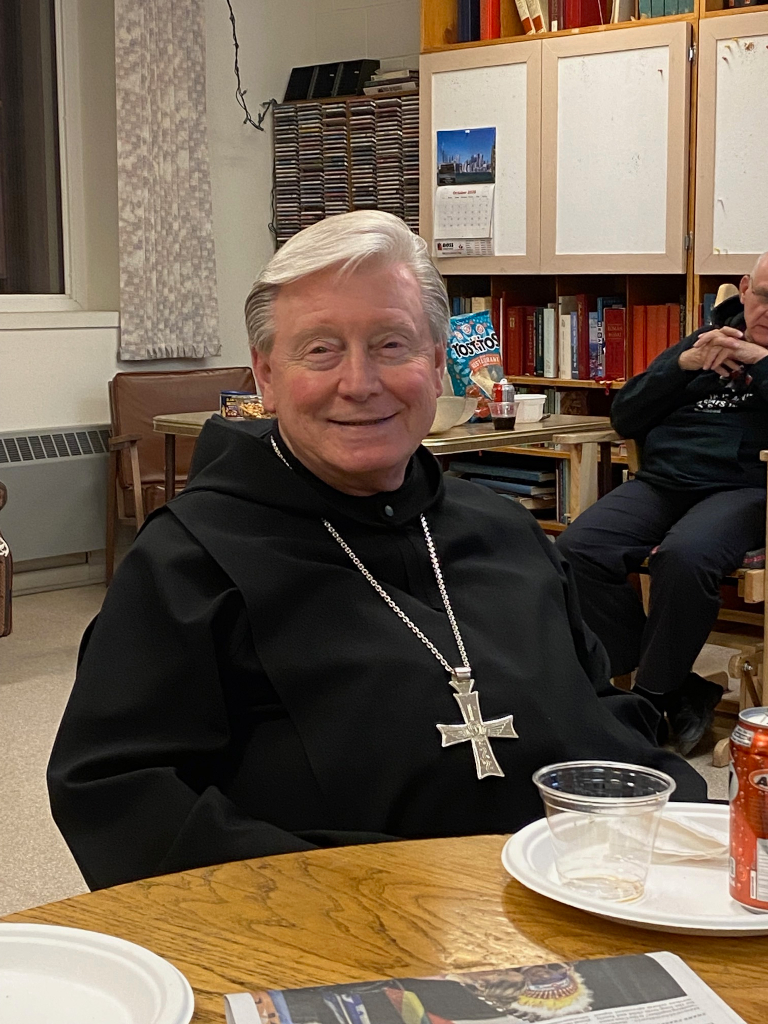

Abbot President Jonathan Licari OSB visited and had a meeting with the monks and aspirants of the abbey. He is currently the President of the American Cassinese Congregation to which St Peter’s Abbey belongs.
.
.
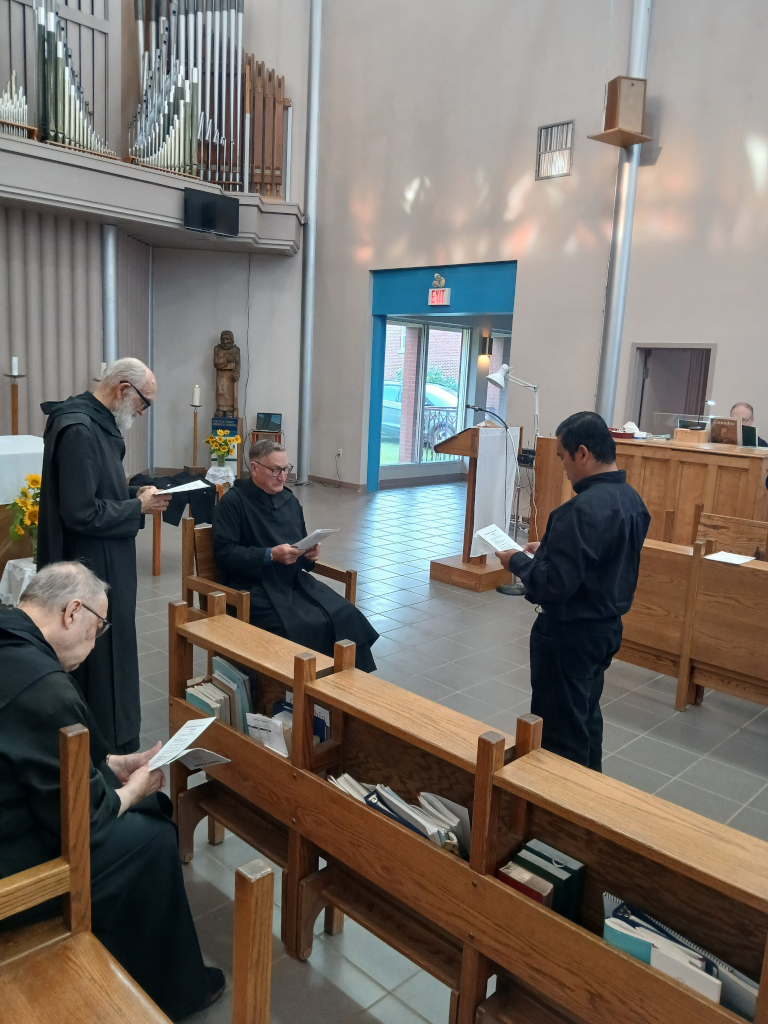
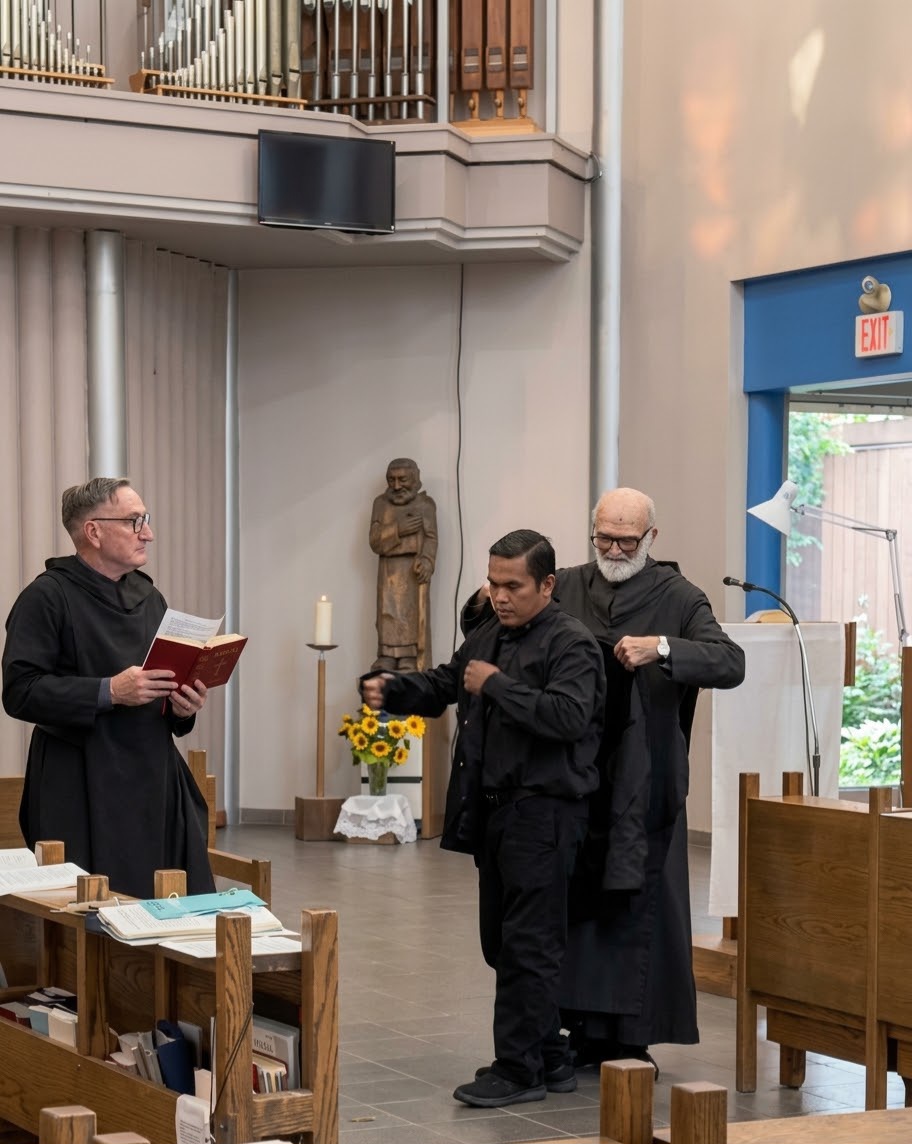
On September 3rd, the feast of St Gregory the Great, Sedney Polinar was formally accepted as a candidate during vespers. The Rite of Initiation into Monastic Life was well attended by the members of the community together with his invited friends and guests of the abbey. Sedney obtained a nursing degree in the Philippines and had previously worked in a continuing care facility in Calgary. Prior to his arrival, Sedney made a few live-in visits to get to know the Benedictine life at St Peter’s Abbey. Please pray for his discernment and for the monastic community.
.
Most men who find themselves thinking seriously about monastic life spend a lot of time imagining what the day-to-day looks like. The imagination tends to run in one of two directions: either a kind of timeless, luminous quiet — all candlelight and chant — or something closer to austere endurance, a life stripped of everything ordinary and warm.
Neither is quite right.
What follows is the actual daily schedule at St. Peter’s Abbey — the real horarium, the real work, the real rhythm of a weekday and a Sunday. Not an idealized version. The point is to give you something concrete enough to evaluate honestly, because honest evaluation is what discernment of your Monastic vocation requires.
The organizing principle of Benedictine life is ora et labora — prayer and work. Those two words sound simple, but they describe something specific: a day in which prayer doesn’t bracket ordinary life but runs through it. The Divine Office is prayed at fixed hours throughout the day, and everything else — meals, work, rest, community — takes its shape around those hours.
This rhythm has been the backbone of Benedictine communities for fifteen centuries. What follows is how it plays out on a specific day in Muenster, Saskatchewan.
6:00 AM — Rising
The day begins before most of the world is awake. Rising at the same hour each morning is itself a practice — not a hardship to be managed but a form of stability, a daily recommitment to the life you’ve chosen. There are no negotiations with the alarm.
6:20 AM — Lauds
Within twenty minutes of rising, the community gathers in the abbey church for Lauds, the ancient morning prayer of the Church. The psalms have been prayed at dawn by monks and religious for millennia. In the early morning quiet of a prairie monastery, that continuity is palpable. Lauds is brief — it doesn’t linger — but it sets the tone for everything that follows.
7:00 AM — Mass
The Eucharist follows morning prayer rather than replacing it. This sequence matters: the day begins in the Office and moves toward the Mass, rather than treating the Mass as the solitary act of piety from which the rest of the day departs. The liturgy is the structure, not the interruption.
8:00 AM — Breakfast
The first communal meal of the day. Meals at St. Peter’s are eaten together. The rhythm of gathering at table — the same faces, the same hour, day after day — is part of how community is built and maintained. It’s ordinary in the best sense of the word.
9:00 AM — Work or Study
The first work period covers a range of activities depending on the monk and the season. Farming, building and grounds maintenance, administrative work, cleaning, study, and reading all fall within this block. Different monks contribute differently, according to their gifts, their formation, and the community’s current needs. This is ora et labora made concrete: the work is real work, done in service of the community and offered to God.
10:00 AM — Coffee Break
Worth naming plainly. Monastic life is not without ordinary human moments — and this one happens twice a day. The community gathers informally. Conversation happens. On a cold Saskatchewan morning in February, this break has its own particular value.
12:00 PM — Mid-day Praise
A brief pause at midday to return to prayer before lunch. The work morning doesn’t run uninterrupted to the meal — the Office intervenes, deliberately, as a reminder of what the work is for. Mid-day Praise is short, but its placement in the day is intentional.
12:15 PM — Lunch
The midday meal, taken together, each monk takes their food in “Statio” or Station within the community. Lunch is eaten in silence while the reader reads from the book selected for the benefit of the monks.
1:00 PM — Work
The afternoon work period follows the same pattern as the morning — farming, maintenance, administration, cleaning, study, reading — shaped by what the community needs and what the individual monk is assigned to.
3:00 PM — Coffee Break
The second informal gathering of the day. Across the liturgical year and across Saskatchewan’s dramatic seasonal shifts, this time looks the same in July as it does in November. The rhythm holds.
5:35 PM — Vespers
Evening prayer — one of the two hinge hours of the Divine Office, alongside Lauds. The workday closes not by simply stopping but by returning, once more, to the psalms. Vespers marks the transition from the active hours of the day to its quieter close.
6:00 PM — Supper
The evening meal, again taken together. By this point in the day, the community has prayed together four times, worked alongside one another for hours, and shared two previous meals. The texture of supper is different from breakfast — the day is behind everyone, not ahead.
6:30 PM — Recreation
Unstructured community time. Conversation, reading, doing Jigsaw puzzles, whatever the evening permits. This hour deserves more attention than it usually gets in descriptions of monastic life. It’s where brotherhood is built outside of formal structure — not through programming but through the ordinary proximity of people who have chosen to live their lives together.
7:30 PM — Vigils
The final prayer of the day. The community gathers once more before the grand silence of night. Vigils closes the day as Lauds opened it — in the abbey church, with the psalms, together. The day that began in prayer ends in prayer.
Sunday has a noticeably different quality. The morning is slower, the Mass is later and more communal, and the absence of the morning work period gives the day a more spacious feel. It is, in the most straightforward sense, a day of rest within the weekly cycle.
7:00 AM — Rising (an hour later than weekdays)
7:30 AM — Lauds
8:00 AM — Breakfast
10:00 AM — Mass
The Sunday Mass is later, more solemn, and more communal in character than the weekday celebration. For a Benedictine community, Sunday Mass carries particular weight — it is the weekly renewal of the entire community’s central act.
11:45 AM — Mid-day Praise
12:00 PM — Lunch
During lunch on Sundays the monks may talk as there is no reading that day.
3:00 PM — Coffee Break
5:35 PM — Vespers
6:00 PM — Supper
6:30 PM — Recreation
7:30 PM — Vigils
What Sunday doesn’t have is a work period. That absence is meaningful. The rhythm of a distinct Sabbath within the week isn’t incidental — it’s built into the structure of life deliberately, a weekly reminder that the work serves the prayer, not the other way around.
A schedule like this does something to a person, given enough time.
Stability replaces ambition as the organizing principle of the day. You’re not building toward something or moving on to the next thing — you’re returning, again and again, to the same hours, the same church, the same community. That repetition isn’t monotony. It’s formation.
The repeated return to prayer throughout the day changes the experience of time. Time isn’t managed or optimized here. It’s offered. The hours of the Office mark not what you’ve accomplished but what you’ve brought to God.
And community — genuine community — is built through this kind of shared repetition. Not through retreat weekends or structured bonding experiences, but through the same faces at Lauds, the same voices at Vespers, the same table at supper, year after year. Brotherhood accumulates in the ordinary.
The schedule is demanding precisely because it asks for consistency rather than intensity. Anyone can sustain a burst of spiritual fervor. What Benedictine life asks for is the willingness to show up at 6:20 in the morning, every morning, for the rest of your life. That’s a different kind of commitment — and a different kind of gift.
Is there personal time built into the day? The recreation period from 6:30 to 7:20 PM provides unstructured time each evening. Work periods also allow for individual variation — monks engaged in study or reading have a degree of personal rhythm within the broader structure. Following Vigils during the Grand Silence monks have more personal time before they retire for the night but they must respect the silence.
Do monks ever leave the abbey grounds? Yes. While the monastery is home, monks do leave for legitimate purposes — parish ministry, medical appointments, community errands, and other needs. St. Peter’s Abbey is not a cloistered community in the strict sense.
Is silence observed during meals or at other times of day? During Lent the monks eat breakfast in silence. Silence is also observed during lunch Mon – Sat as previously mentioned. Also after Vigils silence is observed.
What happens if a monk is sick or unable to keep the schedule? “Care of the sick must rank above and before all else, so that they may truly be served as Christ” – RB Chapter 36. If a monk is sick they may stay in their room or be moved to the sick quarters if need be. Someone will be assigned to care for them if needed and they can attend Office, etc. as they may tolerate.
How does the daily schedule change across the liturgical seasons? During the year the schedule changes as the Superior deems it necessary.
Reading a schedule can tell you what monastic life looks like. It can’t tell you what it feels like to pray Lauds in the dark on a January morning in Saskatchewan, or what the coffee break conversation sounds like after a morning of outdoor work in September, or what Vespers does to the end of a long day.
That’s what the Live-In experience is for. Approximately two weeks of living this rhythm alongside the monks — not observing it, but participating in it — provides more genuine clarity about whether this life is yours than any amount of reading can.
If you’ve read this schedule and found yourself drawn rather than deterred, that’s worth paying attention to.
Contact Brother Benedict van Ginkel, O.S.B., Sub Prior Email: vanginkelb@stpeters.sk.ca Phone: 306-682-1781
Or visit our Vocations page to learn more about the Live-In experience and the steps of formation at St. Peter’s Abbey.
Geoff Bennetto became an Oblate of St. Peter’s Abbey at mass on March 28, 2026 during Oblate Day.

_

Based on RB 1980: The Rule of St. Benedict in English (Liturgical Press, 1980)
There is a quiet asceticism buried in the pages of the Rule of Saint Benedict. Written around 540 AD and compiled in its modern scholarly edition as RB 1980, the Rule does not treat Lent as a burden reluctantly endured — it treats it as a gift gratefully received. For Benedict, fasting is not punishment. It is formation. And Lent is not a grim season of deprivation but an invitation to become more fully alive.
The opening line of Chapter 49 (The Observance of Lent) sets the tone with striking directness: “The life of a monk ought to be a continuous Lent. Since few, however, have the strength for this, we urge the entire community during these days of Lent to keep its manner of life most pure.” (RB 1980, 49.1–2)
This is not pessimism — it is realism shot through with mercy. Benedict acknowledges that living at full Lenten intensity year-round is beyond most people. Rather than demanding the impossible, he channels this aspiration into the forty days before Easter, carving out a concentrated season of spiritual renewal for the whole community together.
What makes Benedict’s approach so enduring is its integration of the interior and the exterior. Fasting is never merely about the stomach; it is about the soul. Chapter 49 continues: “During these days, therefore, we will add to the usual measure of our service something by way of private prayer and abstinence from food or drink, so that each of us will have something above the assigned measure to offer God of his own will.” (RB 1980, 49.5–6)
Benedict was no romantic about asceticism. He was deeply practical, and Chapter 41 (The Times for the Brothers’ Meals) makes the physical structure of Lenten fasting concrete. During most of the year, the meal schedule rotates with the seasons — monks eat at noon in summer and at midafternoon in autumn. But in Lent, the rhythm shifts: “From the beginning of Lent to Easter, they eat towards evening.” (RB 1980, 41.7)
This single meal in the evening — after Vespers, the late-afternoon prayer — is the heart of Benedictine Lenten fasting. The monk waits through the entire working day before eating. This is not starvation; it is disciplined delay, a physical act of longing that mirrors the spiritual longing of the season itself. Benedict even adds a practical note of care: the evening meal should be timed “so that there is no need for a lamp while eating, and that everything can be finished by daylight.” (RB 1980, 41.8) Even in austerity, there is tenderness.
Perhaps the most countercultural aspect of Benedict’s teaching on Lenten fasting is its tone. He explicitly warns against performing Lenten practices in a spirit of gloom or self-promotion. Chapter 49 continues: the monks should practice their Lenten disciplines “with joy and the inspiration of the Holy Spirit.” (RB 1980, 49.6) The goal is not suffering for its own sake but arriving at Easter with “the joy of spiritual longing.” (RB 1980, 49.7)
This joy is also why Benedict insists that extra Lenten fasting be done with the abbot’s approval. A monk who decides to fast dramatically on his own — more than the community, making a show of personal piety — risks the sin of pride. “Anything undertaken without the permission of the spiritual father will be reckoned as presumption and vainglory, not deserving a reward.” (RB 1980, 49.8–9) True fasting is humble, communal, and accountable.
From the very beginning of the Rule, fasting appears in a broader list of spiritual tools. Chapter 4 (The Tools for Good Works) lists among the essential instruments of the Christian life: “discipline your body; do not pamper yourself, but love fasting.” (RB 1980, 4.11–13) Fasting is not extraordinary; it is simply one of the ordinary tools that shape a person toward God.
During Lent, those tools are sharpened. More prayer. More scripture reading. Fewer words, less food, and greater attentiveness to the grace that makes all of it possible. Benedict’s Lent is not a self-improvement project — it is a communal preparation for the greatest celebration of the year. Easter does not arrive; it is received. And fasting, practiced with joy and humility, is how we open our hands to receive it.
All quotations are drawn from RB 1980: The Rule of St. Benedict in English, edited by Timothy Fry, O.S.B. (Collegeville, MN: Liturgical Press, 1980).
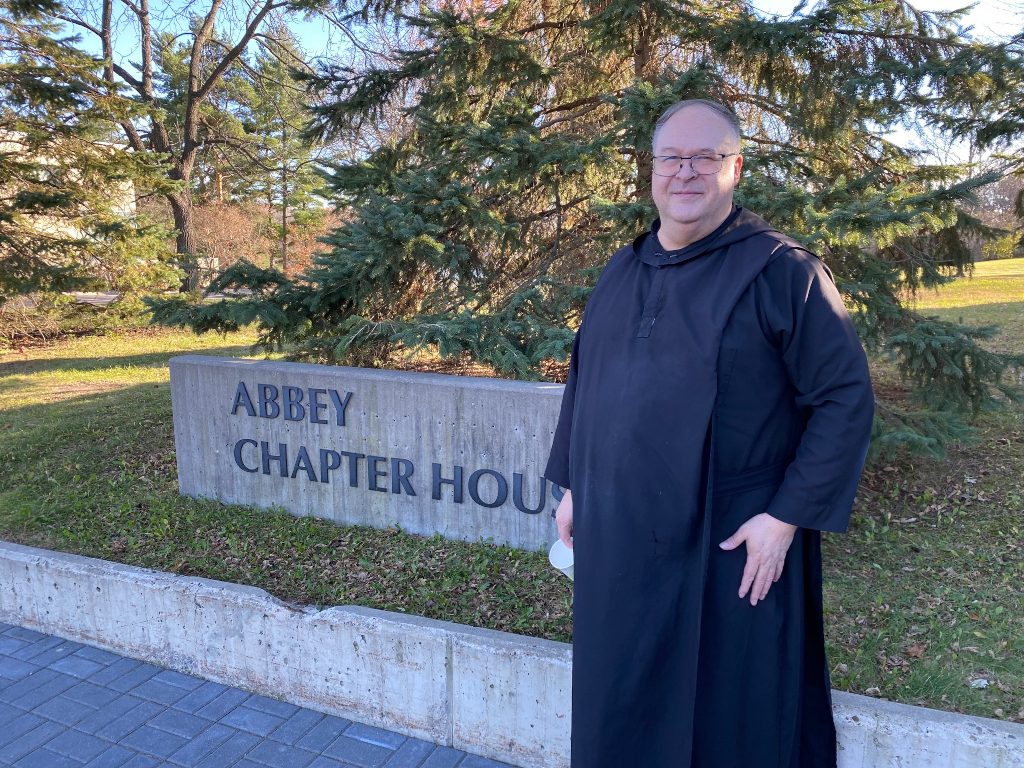
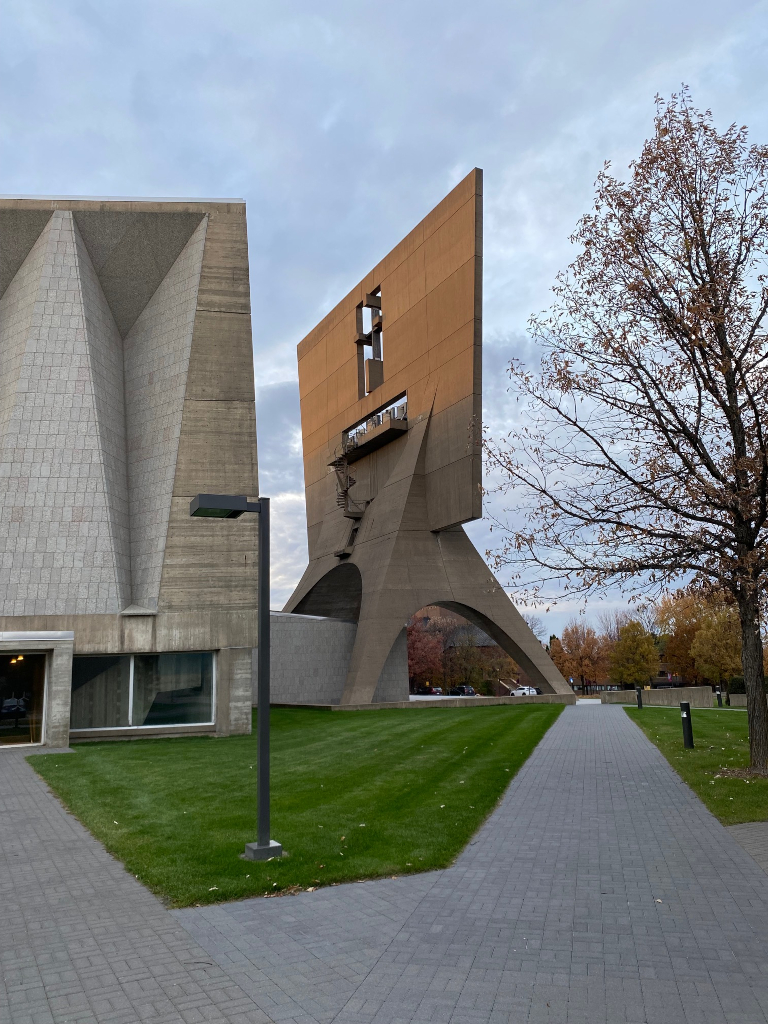
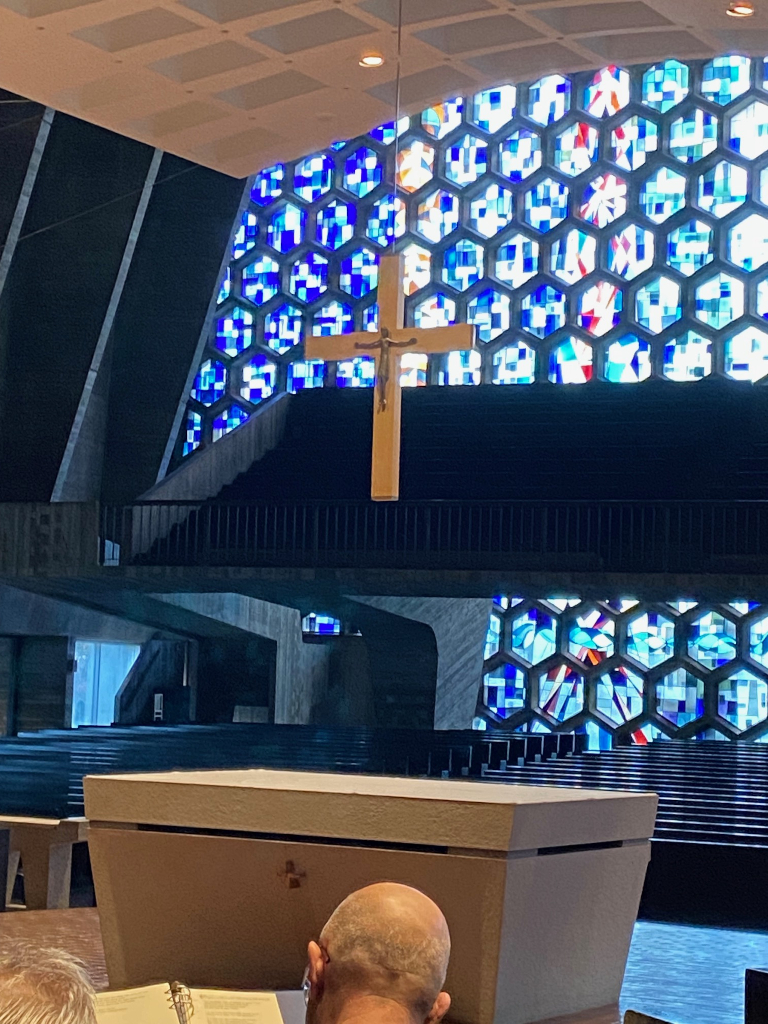
From November 2 to 6 , Br. Benedict attended a Visitation Conference at St. John’s Chapter House in Collegeville, Minnesota. The workshop he participated in prepared at least 12 monks from many abbeys to be visitators to 20 abbeys in the American Cassinese Congregation of which we belong. A visitator spends about a week at an abbey interviewing the monks and membeFrom November 2 to 6 , Br. Benedict attended a Visitation Conference at St. John’s Chapter House in Collegeville, Minnesota. The workshop he participated in prepared at least 12 monks from many abbeys to be visitators to 20 abbeys in the American Cassinese Congregation of which we belong. A visitator spends about a week at an abbey interviewing the monks and members and then giving an evaluation, after discussion, to the abbot and to the community. This information is then sent to the abbot president for further evaluation and discussion. Some suggestions are made like, what should happen to retired priests who have just returned to the abbey or how the community could better help the new candidates and novices.rs and then giving an evaluation, after discussion, to the abbot and to the community. This information is then sent to the abbot president for further evaluation and discussion. Some suggestions are made like, what should happen to retired priests who have just returned to the abbey or how the community could better help the new candidates and novices.
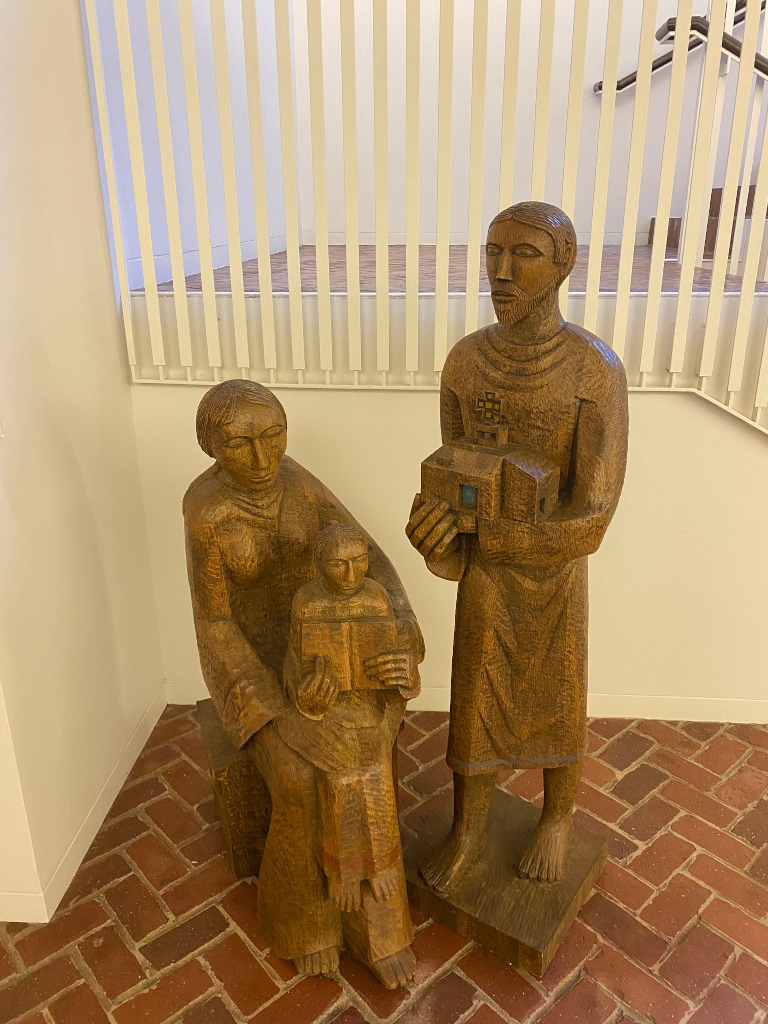

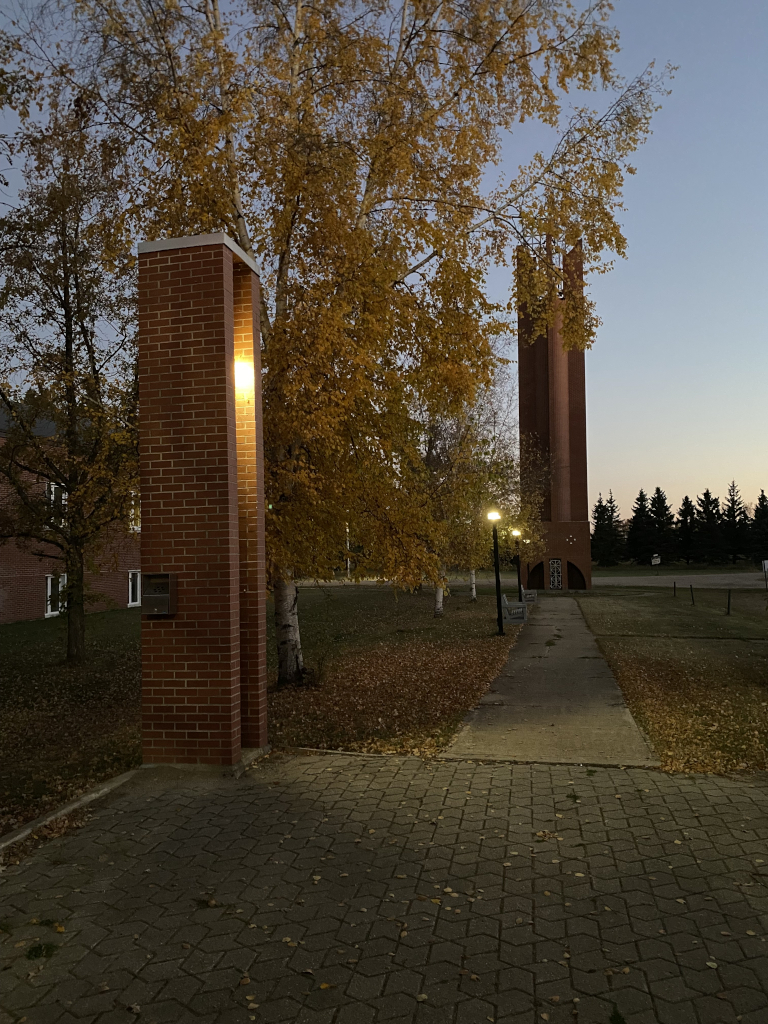
Sunrise on Sunday October 12.
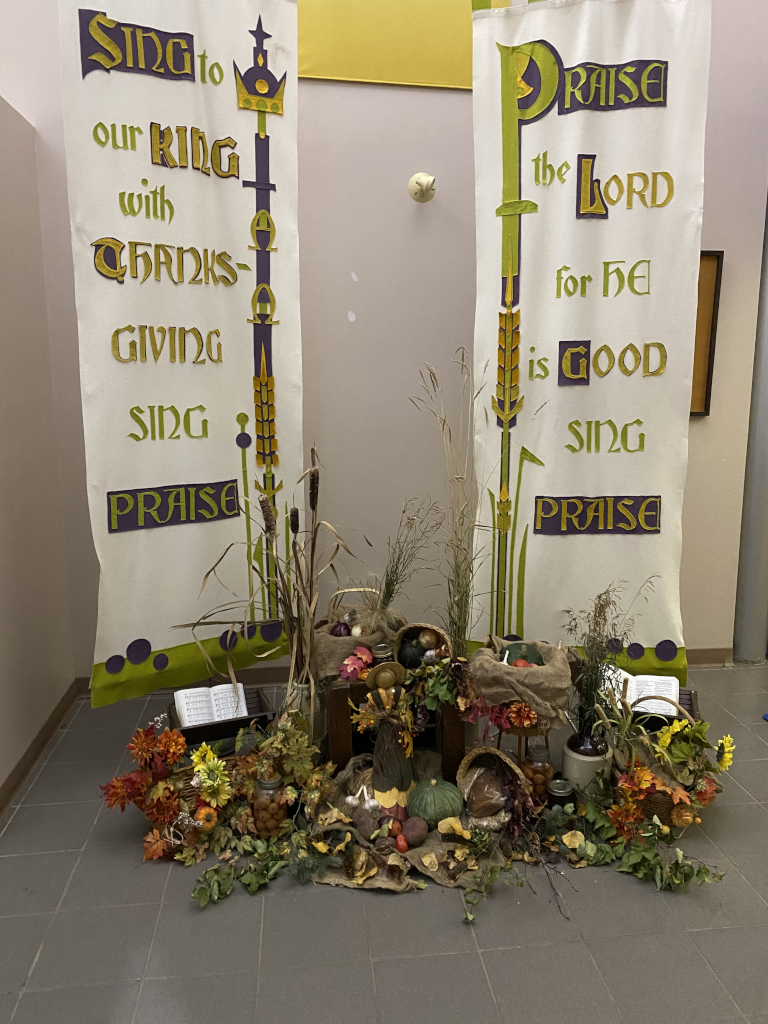
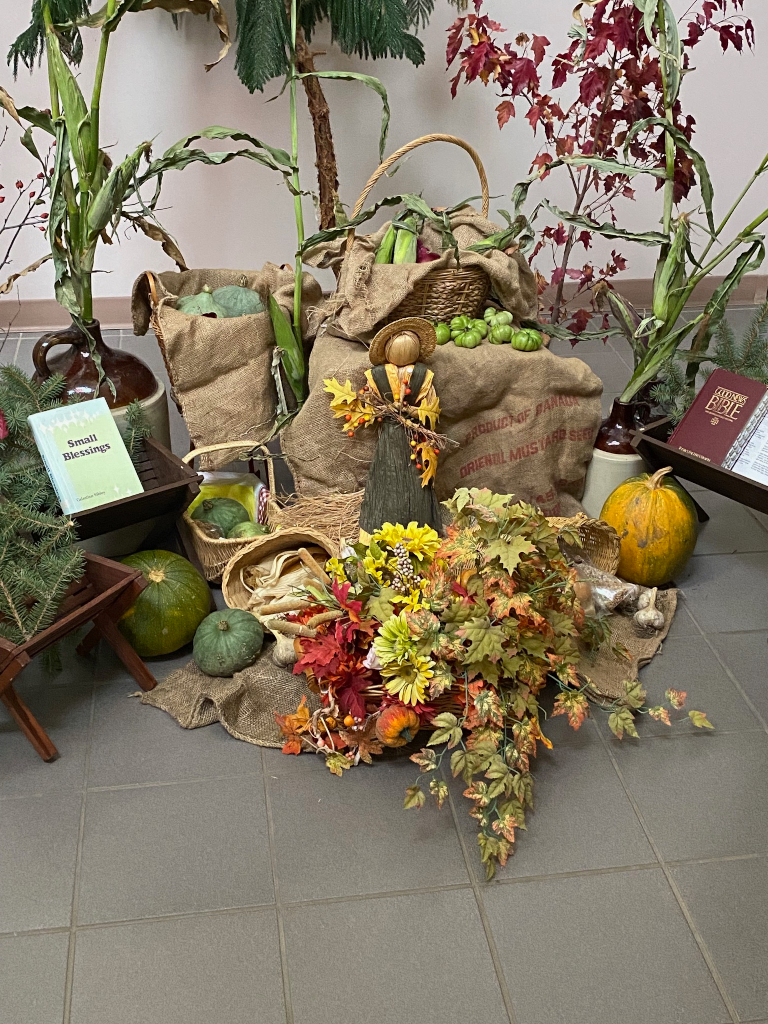
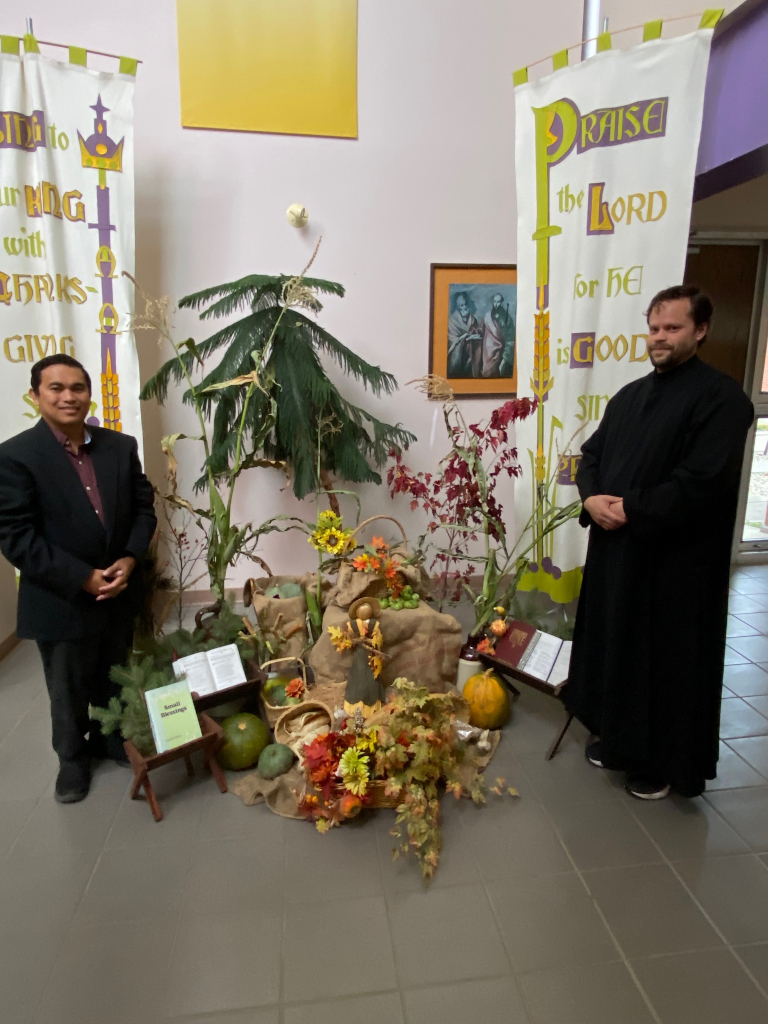
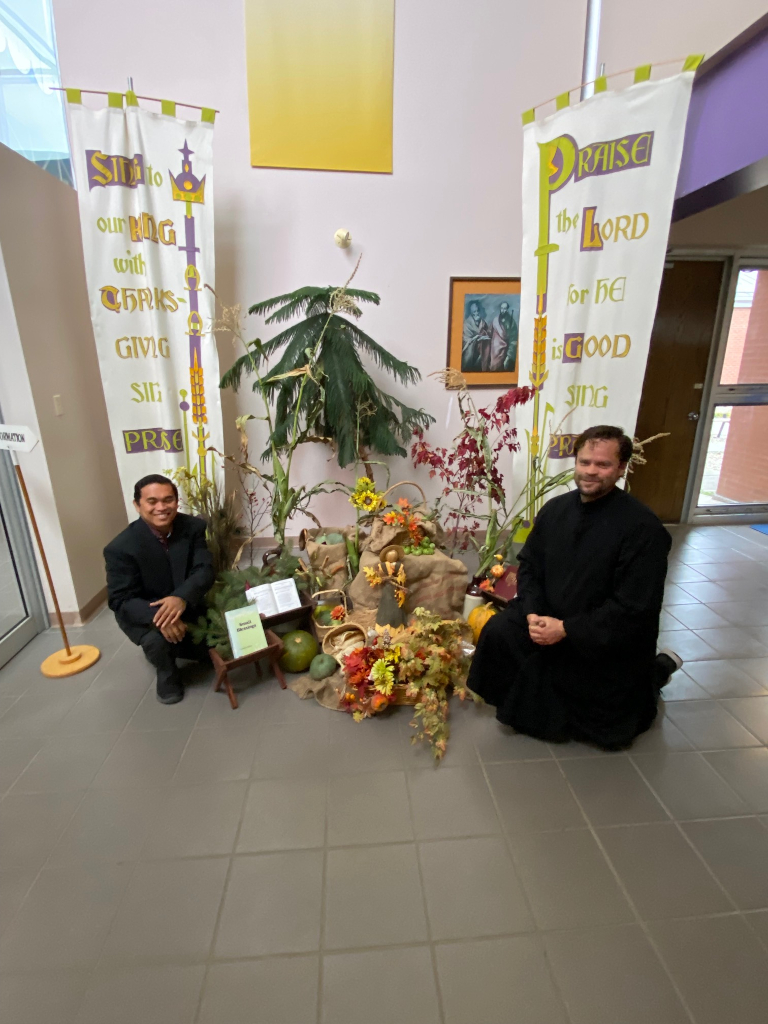
The Thanksgiving display at the Abbey Church entrance.
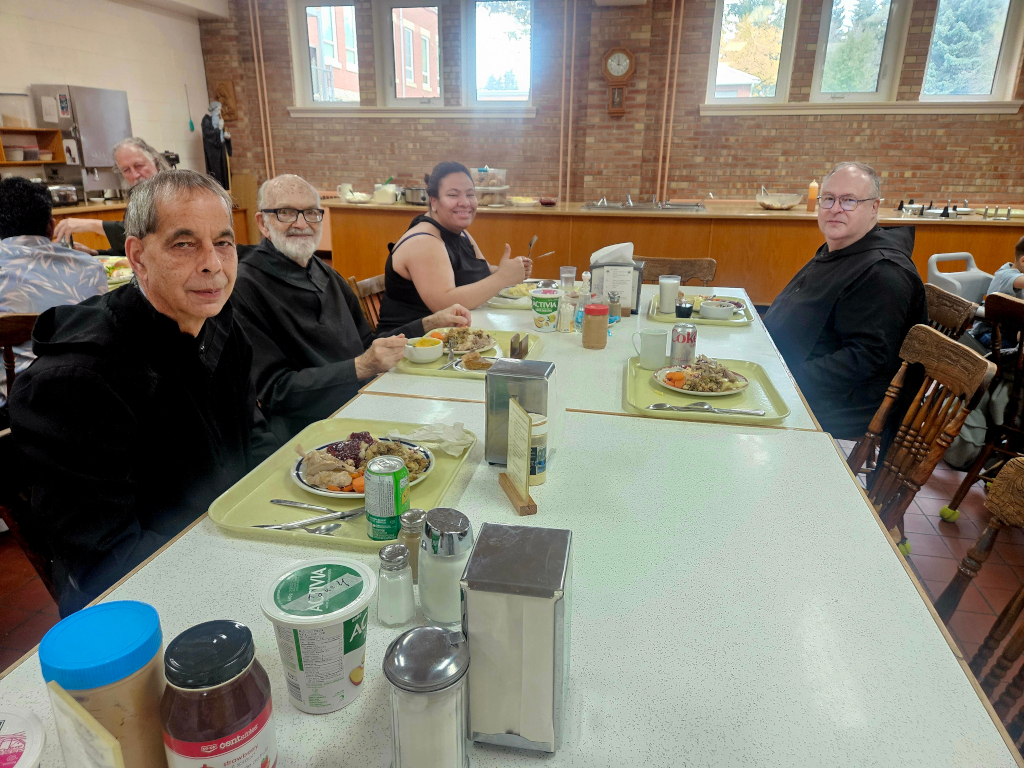
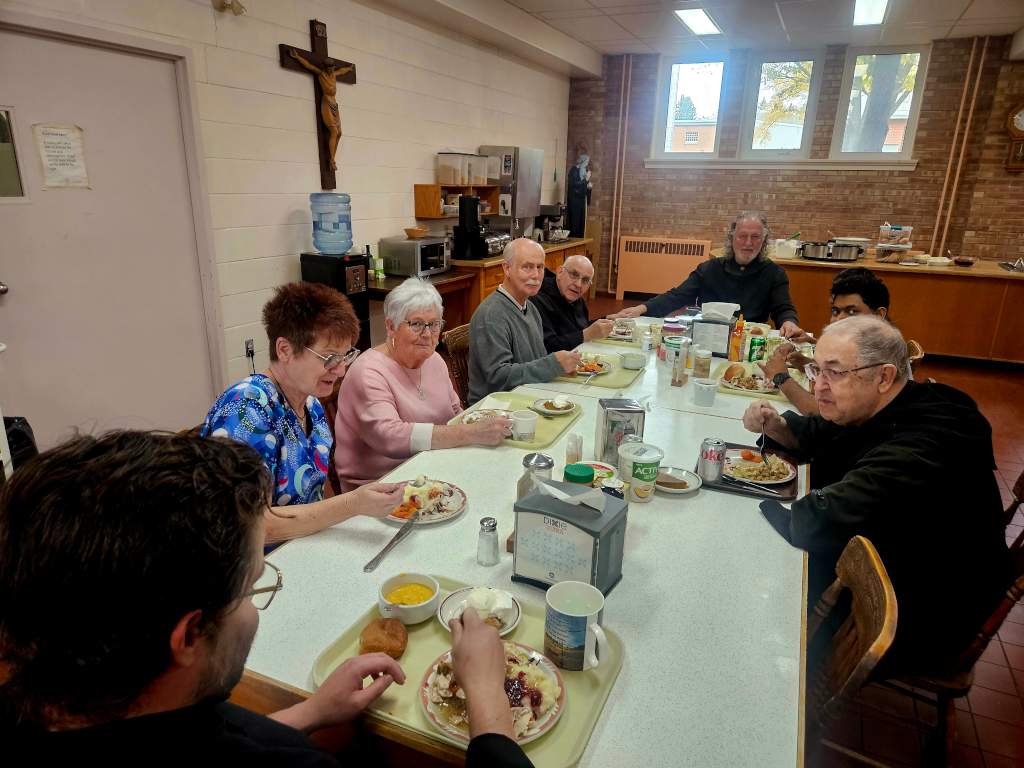
St Peter’s Abbey invited some guests for Thanksgiving Day. A special dinner was held following the midday prayer and Mass.
.
Candidate Sedney and Novice Brian stand before their beautiful Thanksgiving display
.
.
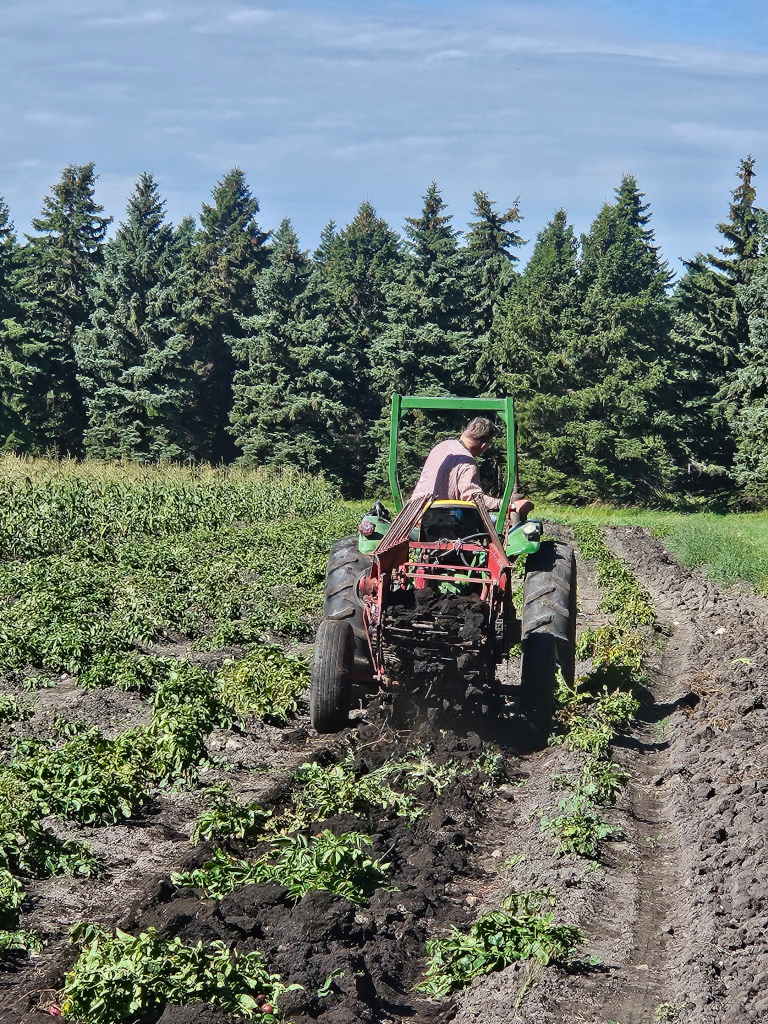
Potatoes were harvested over the summer. U-Pick Corn signs were also transferred to different patches around the abbey. Featured in the photos are: Prior Br Basil, Novice Brian, and Candidate Sedney.
.

.